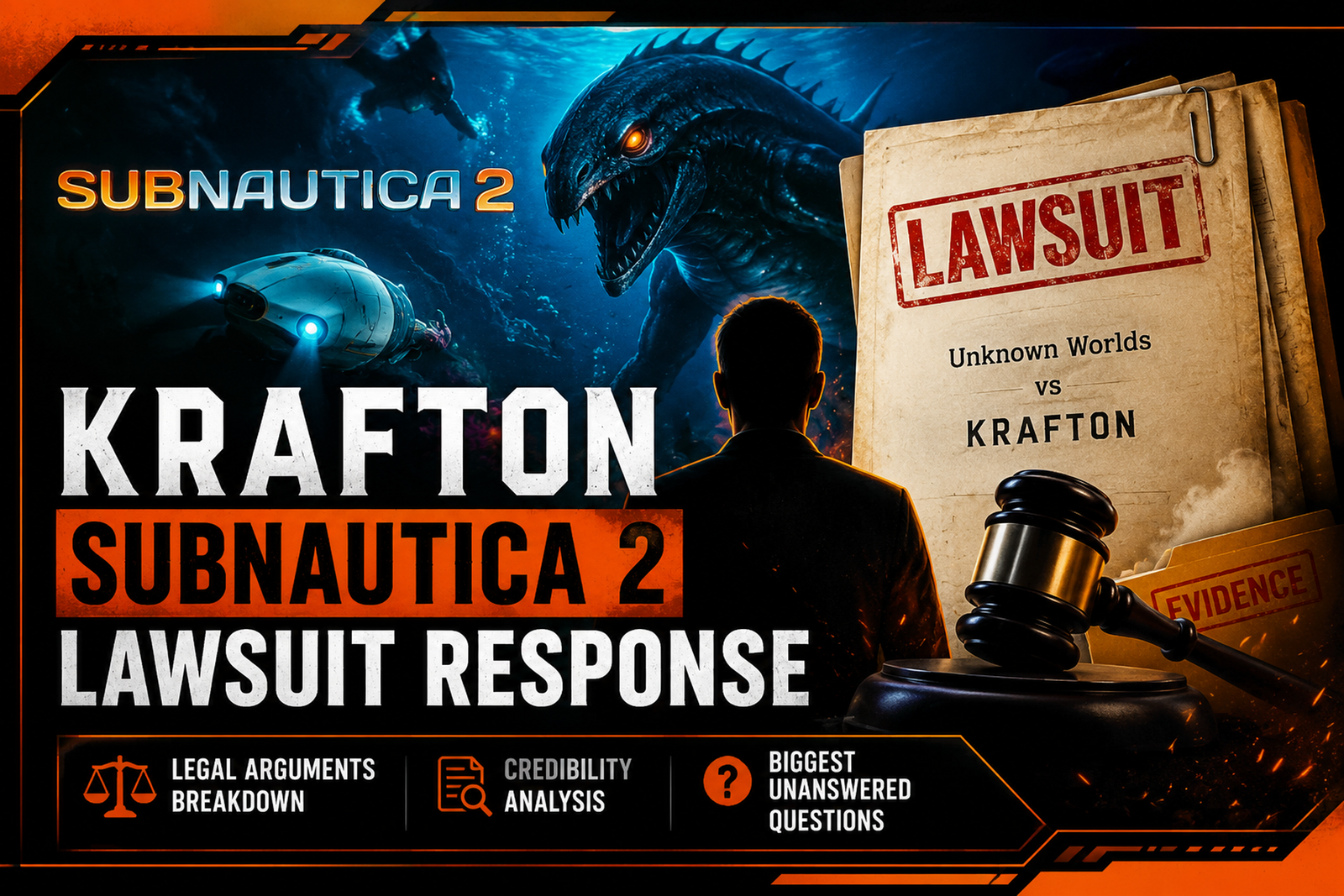
The krafton subnautica 2 lawsuit response hit a nerve with fans, but it also revealed far more than the publisher’s short public dismissal ever did. When former leaders of Unknown Worlds claimed Krafton deliberately stalled Subnautica 2 to dodge a huge earnout payment, the company fired back with a court filing that pulled back the curtain on contract amendments, internal emails, and a much messier behind the scenes story.
Did Krafton’s Response Hold Up?
The lawsuit paints a picture of outright sabotage. Former studio heads argue that Subnautica 2 was practically ready to ship by late 2023, but Krafton moved dozens of developers off the project and onto something called Project M, purposely running out the clock so the earnout deadline would expire. No launch, no payday. Krafton’s public statement called all of this nonsense, but its legal filing took a smarter route.
Krafton’s legal strategy focused on the release obligation, not the sabotage claims. They pointed to the contract itself and said the earnout clause was simply a condition, if the game hits store shelves, then money flows. If not, tough luck. There was no “best efforts” promise to hit that date, no obligation to rush development. Legally, that’s a huge gap. You can’t breach a promise you never made.
But here’s the twist. California law adds a layer called the implied covenant of good faith and fair dealing. That means even if the contract doesn’t spell out a duty, you still can’t deliberately prevent the condition from happening. Krafton knew this, and its response zeroed in on it. The publisher claimed that the very people now crying foul actually agreed to the delays, voted for them, and signed off on schedule changes. If true, the story stops being about a secret corporate plot and becomes about a team collectively deciding to shift priorities and then regretting it later.
The sabotage theory also stumbles over a basic question that is if Krafton intentionally stripped the team to miss the deadline, why did the plaintiffs keep signing contract amendments that moved the deadline further out? Those signatures are a problem for the “they purposely killed our earnout” narrative. Krafton’s legal team highlighted that the developers themselves pushed back the launch window to 2024 and then into an early access 2025 window, all while knowing exactly how the earnout was structured. You can’t have it both ways.
What Krafton’s Court Filing Reveals That Its Public Statement Didn’t
The public statement from Krafton was barely two sentences. Lawsuit is meritless, we’ll defend ourselves. Boring. The legal filing, though, spilled a treasure trove of details that nobody saw coming.
First, those contract amendments. The filing revealed that the earnout deadline didn’t just slip because Krafton wanted it to. The parties signed formal, written extensions multiple times. The original deadline was likely December 2023, but that got pushed to Q2 2024 and then again to a 2025 early access launch. The kicker is that some of the plaintiffs put their own signatures on these amendments. That single fact turns the whole “they missed our deadline on purpose” argument on its head. How can you claim a conspiracy when you helped move the goalposts?
Second, Krafton gave context around Project M that the lawsuit left out. The plaintiffs described Project M as a resource stealing side gig. Krafton’s documents told a different story. They called it a board approved project meant to expand the Subnautica universe, and they produced emails showing senior devs, including the plaintiffs, were genuinely excited about splitting the team to work on both games in parallel. Those messages painted a picture of a studio that saw a chance to grow the franchise’s value, not a studio being gutted against its will. Whether those emails are carefully selected or not remains to be seen, but they certainly muddy the sabotage claim.
Third, the filing included a sharp procedural point that the public statement never hinted at. Krafton argued the lawsuit is premature because the earnout window hasn’t closed yet. Subnautica 2 is still in development, and under the amended agreements, the payment opportunity is still alive. That completely reframes the dispute.
Who Looks More Credible After Krafton’s Response?
Weighing credibility means looking past fandom and focusing on what is actually on the table because the plaintiffs still have one strong card and the timing feels rotten. Staff reassignments ramped up just as the original earnout deadline approached, and Krafton’s public messaging switched from “targeting 2023” to “taking our time for quality.” Former employees claim there are Slack messages and internal documents showing executives knew exactly how the schedule would affect the payout. If those messages surface and show a conscious decision to avoid the liability, that’s damning.
But Krafton now has the receipts. The signed amendments are the kind of evidence that juries love. When sophisticated founders, represented by their own lawyers, sign documents that extend the deadline, it’s hard to later argue that the deadline was a sacred line that the company schemed to breach. Krafton’s lawyers hammered this point in court, reminding everyone that these weren’t clueless victims but experienced businesspeople who knowingly rewrote their own compensation terms.
Krafton’s documents show the developers weren’t passive victims but active decision makers in the delays. That doesn’t prove Krafton acted in good faith, but it makes the idea of a deliberate corporate sabotage much harder to swallow whole. The plaintiffs still have the emotional truth of a team torn apart, while Krafton holds the legal high ground with amendments and emails.
For now, neither side fully owns the truth. The most telling evidence, the raw internal chats and unredacted plans, isn’t public.